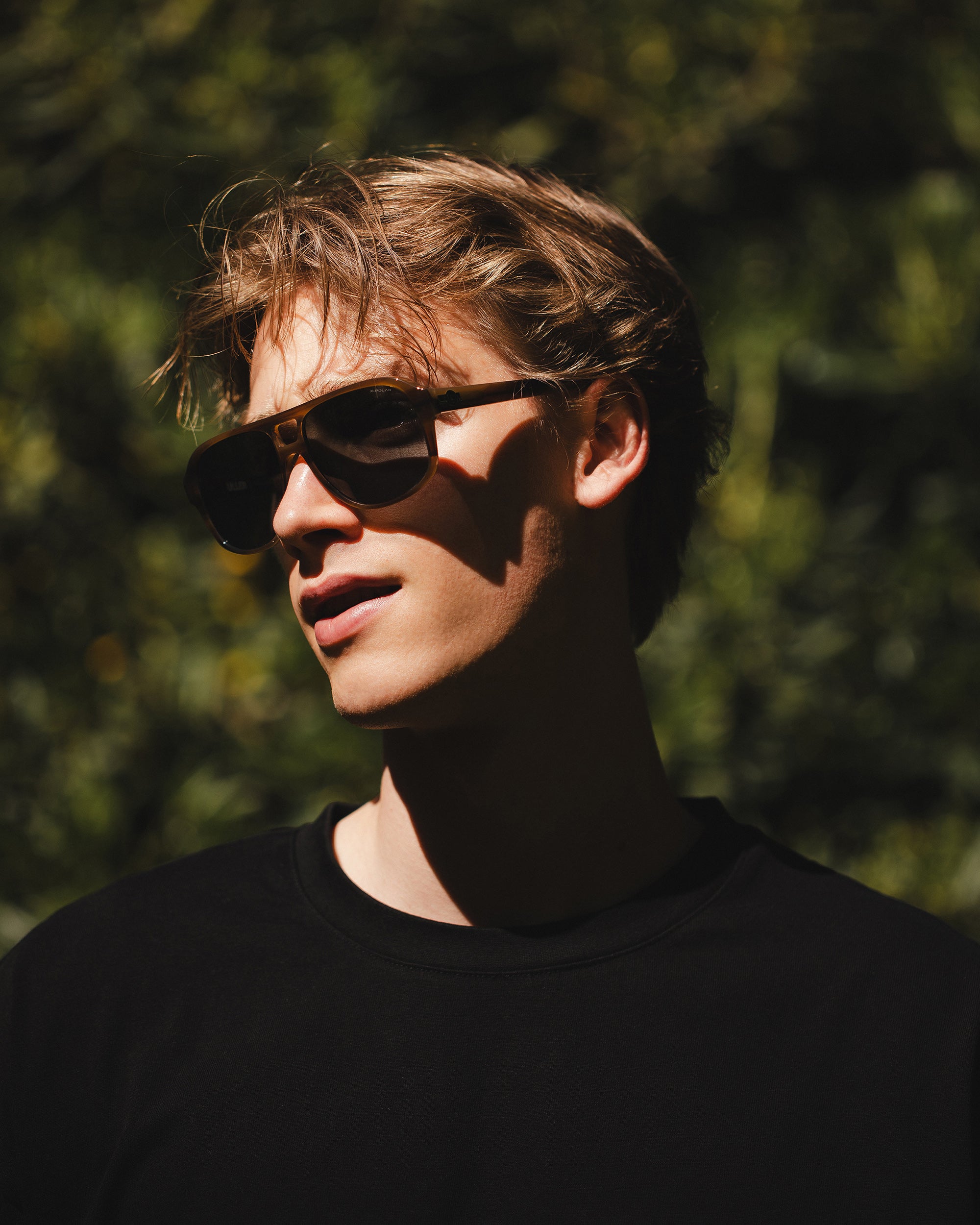
If you practice outdoor sports, you know that your eyes work as hard as your legs, lungs, or concentration. You run, pedal, walk, climb, fly, ski, or train constantly watching the terrain: a stone, a root, a curve, a shadow, a change in light, a gust of wind, a descent, or a surface that reflects too much.
That is why wearing sports sunglasses should not be seen as an aesthetic whim. It is part of the gear. Just as you carefully choose your shoes, backpack, helmet, jersey, jacket, or sunscreen, you should also carefully choose the protection for your eyes.
Light can help you enjoy the outdoors more, but it can also become a nuisance if you are not prepared. Excess brightness, reflections, wind, dust, insects, sweat, snow, water, road, or sudden changes between shade and sun can affect vision and, therefore, the comfort and safety with which you practice sports.
Good sports glasses not only protect from the sun. They also help maintain more stable vision, reduce distractions, and allow you to focus better on what you are doing. In sports, seeing well is not a detail. It is part of performance.
If you are looking for glasses designed for outdoor movement, you can explore our collection of The Indian Face sports sunglasses, with models prepared for city, mountain, beach, road, and outdoor life.

Why sports glasses are important
Outdoor sports require comfortable and protected vision. It doesn't matter if you practice light running in the city, road cycling, hiking, trail running, climbing, paragliding, skiing, or water sports. In all cases, your eyes are exposed.
Solar radiation, wind, dust, sweat, insects, and reflections can affect how you see and react. Proper sports glasses act as a barrier against these elements and help make the activity smoother.
Also, when there is too much light, many people squint without realizing it. That repeated gesture can cause facial tension, eye strain, and loss of concentration. In sports, that loss of comfort is more noticeable because the body is already exerting effort.
Good sports glasses should help you forget you’re wearing them. They shouldn’t move, pinch, fog up constantly, or force you to adjust them every few minutes. When glasses work well, they disappear. They protect you and let you keep going.
UV protection: the first thing you should look for
The primary function of sports glasses should be to protect against ultraviolet radiation. Style, lens color, or frame design matter, but they should never come before protection.
One thing to be very clear about: a dark lens alone does not guarantee UV protection. The color can reduce visible light, but real protection depends on the lens filter. That’s why before choosing glasses, it’s important to check that they indicate protection against UVA and UVB rays.
In outdoor sports, this protection is even more important because exposure is usually prolonged. You might spend an hour running, four hours cycling, a whole morning in the mountains, or a full day in the snow. The total hours matter.
It’s also important to remember that radiation doesn’t disappear on cool or cloudy days. You may feel less heat but still be exposed. That’s why you shouldn’t decide based on temperature alone.
Polarized, mirrored, and protective: they are not the same
A common mistake is thinking that polarized or mirrored glasses are automatically protective. This is not always the case. They are different features.
Polarized lenses help reduce glare caused by surfaces like water, asphalt, snow, or glass. They are very useful in water sports, driving, cycling, mountain activities, snow, or any activity with a lot of glare.
Mirrored lenses reduce some visible light and provide a sporty look, but their appearance alone does not guarantee UV protection.
UV protection is the feature you should always check. Ideally, combine good UV protection, the right lens category, and polarization if your activity requires it.
In short: glasses can be stylish, dark, or mirrored, but the important thing is that they truly protect.

Sports glasses for cloudy days
Cloudy days can be deceiving. There is less feeling of heat and the light seems softer, but that doesn't mean your eyes don't need protection. UV radiation can still be present, and diffuse brightness can tire your eyes during long workouts.
On cloudy or partly cloudy days, you might not need very dark lenses. In fact, lenses that are too dark can reduce visibility if the environment already has low light. The important thing is to choose a lens that protects but still lets you read the terrain well.
For soft light conditions, fog, shade, or constant changes, lighter, yellow, orange, or contrast lenses can work, as long as they have proper protection. This type of lens can help better perceive reliefs, paths, stones, or irregularities.
In trail running, mountain biking, or hiking, this can be very useful. It’s not just about blocking light, but about seeing better where you step or where you’re going.
Sports glasses for sunny days
On bright sunny days, the need for sports glasses is obvious. The brightness can be so strong that it affects concentration, especially in sports that require precision, speed, or constant attention.
When the sun is high, when you train near water, when you run on light asphalt, when you cycle on open roads, or when you climb mountains, the right lens can completely change the experience.
For high brightness, category 3 lenses are usually a very versatile option. They reduce visible light entry and are useful at the beach, mountains, road, and outdoor use. If they are also polarized, they can help reduce reflections on water, snow, or asphalt.
In extreme conditions, like high mountains or intense snow, more specific protection may be necessary. In those cases, it’s worth considering technical glasses or masks designed for the specific activity.
Fit matters as much as the lens
Sports glasses can have excellent lenses, but if they don’t fit well, they won’t work. Fit is one of the most important points and often one of the least valued.
During sports, the frame must stay stable. It shouldn’t slip with sweat, bounce while running, bother with a helmet, press behind the ears, or move when you turn your head.
The temples, nose bridge, and frame curvature have a big impact. Glasses that are too rigid can be uncomfortable. Ones that are too loose can be distracting. Glasses that are too tight can fog up. Ones that are too open can let in too much side light or wind.
Before choosing, think about your main sport. Not all disciplines require the same type of fit.
Lightness and durability
Sports glasses should be light. When you wear glasses for several hours, every gram counts. A heavy frame can cause discomfort on the nose bridge, temples, or behind the ears.
But lightness doesn’t mean fragility. Good sports glasses must withstand real use: backpacks, sweat, dust, temperature changes, small impacts, and constant movement.
Materials like polycarbonate are often used for their combination of lightness and durability. Also, in sports, it’s important that the frame has some flexibility and that the hinges are durable.
The best sports glasses aren’t the ones that catch your eye most on a table. They’re the ones that remain comfortable after an hour of training.

Sports glasses for running
In running, glasses should be light, stable, and comfortable. When running, every small movement repeats thousands of times. If the glasses slip, bounce, or press, they will end up bothering you.
For running in the city, it’s best to look for a lens that reduces brightness without distorting the surroundings. You need to see cars, traffic lights, curbs, bicycles, pedestrians, and surface changes.
For trail running, the demands increase. There are roots, stones, branches, mud, shadows, clearings, and uneven terrain. In this case, a lens with good contrast can help better read the terrain.
It’s also important that the glasses ventilate well. Fogging can be a problem during intense climbs, temperature changes, or humid days.
Sports glasses for cycling
In cycling, protection against the wind is essential. At certain speeds, air, dust, insects, and small particles can hit the eyes. Also, light changes quickly between open areas, shadows, tunnels, trees, or road reflections.
A good pair of cycling glasses should offer a wide field of vision, stability, lightness, and good coverage. If you wear a helmet, make sure the arms don’t cause discomfort or pressure.
Polarized lenses can help reduce reflections from asphalt or wet surfaces, although it's advisable to test how they interact with screens, GPS devices, or bike computers. Every athlete has their preferences.
Sports glasses for hiking and trekking
When hiking, glasses need to be comfortable for many hours. There may not be as much speed as in cycling or as much impact as in trail running, but the exposure is usually prolonged.
The mountain combines sun, shade, wind, dust, rock, water, and altitude changes. A versatile pair of glasses with good UV protection and a lens suitable for high brightness can be enough for many routes.
They should also be easy to store. In trekking, glasses go in and out of the backpack frequently. A protective case prevents scratches and impacts.
Sports glasses for snow
Snow reflects a lot of light. That is why eye protection is essential in winter sports. If you are going skiing or snowboarding, often the most suitable option will be a specific mask because it offers greater coverage against wind, snow, and falls.
But if you are going to walk around a ski resort, do an easy hike, or spend time in snowy mountains, good sports sunglasses can be useful as long as they have adequate protection, sufficient category, and good coverage.
In snow, polarization can help reduce glare, but it is not the only important factor. UV protection, lens category, and frame shape also matter.
Sports glasses for water sports
In water sports, polarization makes a lot of sense. Water constantly reflects light and can create very annoying glare. Surfing, paddleboarding, kayaking, sailing, fishing, windsurfing, or coastal activities require comfortable and protected vision.
In these cases, besides UV protection, it is advisable to look for polarized lenses, sturdy frames, and a secure fit. If there is a chance of falling into the water, using retention accessories can also be useful.
Salt requires care. After using glasses near the sea, rinse them with fresh water and dry them with microfiber to extend their lifespan.
Sports glasses for paragliding and high-altitude sports
In sports like paragliding, climbing, or high-altitude activities, vision plays a key role. There is more exposure, more wind, and a different light sensation. The eyes need protection from radiation, air, dryness, and glare.
In these disciplines, the glasses must fit very well. They cannot move or distract. They must also offer good side coverage and a lens suitable for the brightness.
Adventure sports leave little room for discomfort. Everything you wear must serve a purpose.
How to choose the lens color
The lens color is not just aesthetic. It also influences the perception of the environment.
- Gray: reduces brightness while maintaining fairly natural colors. Very versatile for general use.
- Brown: adds warmth and contrast. Useful for mountain, hiking, and driving.
- Green: provides balanced and comfortable vision outdoors.
- Yellow or orange: can improve contrast on cloudy days, fog, or low light.
- Blue or mirrored: offers a sporty look and can work well in bright light, depending on the lens category.
- Red or pink: can help enhance contrast in certain sports environments.
The choice should depend on the activity, light, and your visual comfort. There is no single perfect color for everything.

Common mistakes when buying sports glasses
- Choosing only for style: design matters, but protection and fit matter more.
- Not checking UV protection: a dark lens does not guarantee real protection.
- Buying glasses that move: if they don’t fit well, they will be a distraction.
- Using the same lens for everything: running in the shade is not the same as skiing in bright sun.
- Not considering the helmet: important in cycling, skiing, or technical sports.
- Not valuing ventilation: fogging can ruin an outing.
- Not caring for them after use: sweat, salt, and dust cause damage if not cleaned.
How to care for your sports glasses
Sports glasses endure more than urban-use glasses. Sweat, dust, sand, salt, impacts, backpacks, and temperature changes are part of their normal life.
To care for them, clean with water and mild soap when dirty. Always use a microfiber cloth. Do not clean them with your shirt, especially if there is dust or sand. Store them in a case and avoid leaving them loose in your backpack.
If you practice sports near the sea, rinse them with fresh water afterward. If you do mountain sports or cycling, check that no particles remain in the hinges or nose bridge. Simple care greatly extends the lifespan of the glasses.
What good sports glasses should have
- Proper UV protection.
- Lens adapted to lighting conditions.
- Lightweight and durable frame.
- Stable fit during movement.
- Good coverage against wind and side light.
- Sufficient ventilation to reduce fogging.
- Comfort with a helmet if you practice cycling, skiing, or technical sports.
- Style you'll really want to wear.
At The Indian Face, we design glasses for those who live outdoors as part of their daily life. If you are looking for protection, comfort, and style to train, travel, or go to the mountains, you can explore our collection of sports sunglasses.
Frequently asked questions about sports sunglasses
Do I need sports glasses if I do outdoor sports?
Yes, it is highly recommended. They help protect the eyes from UV radiation, wind, dust, reflections, insects, and excess brightness.
Are regular sunglasses good for sports?
It depends on the activity. For light sports, they may be fine if they protect well and are comfortable, but for running, cycling, mountain, or snow, it is better to use more stable glasses adapted to movement.
What glasses to wear on cloudy days?
On cloudy days, lighter or contrast lenses can work, always with UV protection. It is not advisable to use lenses that are too dark if there is little light.
What glasses to wear on very sunny days?
For high brightness, darker lenses usually work, with the appropriate category and, if there are reflections, polarized lenses. In snow or high mountains, more specific protection may be needed.
Are polarized glasses good for sports?
Yes, especially in sports with reflections: water, snow, road, sand, or shiny surfaces. They reduce glare and improve visual comfort.
How should sports glasses fit?
They should stay stable, not slip, not pinch, and allow good peripheral vision. If you wear a helmet, they must be compatible with it.
Where to buy sports sunglasses?
You can find models for outdoor, sports, and active life in the The Indian Face sunglasses collection.
Conclusion
Sports sunglasses are not a secondary accessory. They are part of the gear when you practice outdoor sports. They protect your eyes, reduce discomfort, improve visual comfort, and help you stay focused on what matters: movement, terrain, and the experience.
It's not about wearing just any glasses. It's about choosing a frame that fits well, a lens suitable for the light, real UV protection, and a design you can wear for hours without thinking about it.
Because when you go out to train, run, pedal, walk, climb, or explore, your eyes are also part of the adventure. Protect them as you protect the rest of your body.