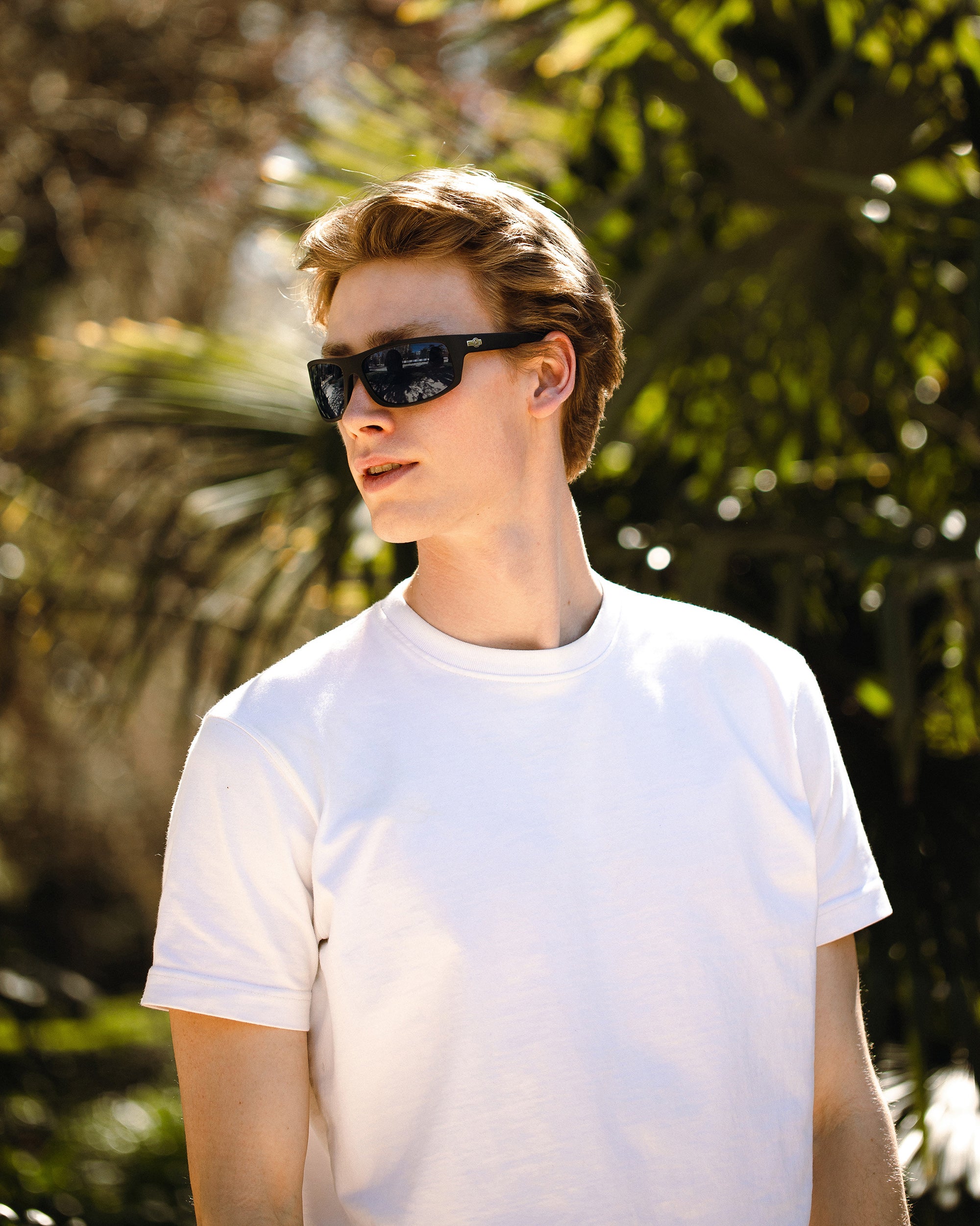
How to choose sunglasses for men according to your face shape
Men also take care of themselves, are interested in trends, and want to choose the accessories they use every day well. Sunglasses are one of those accessories that seem simple but can completely change how a look is perceived. They not only protect your eyes: they also add character, balance the face, and help define personal style.
Choosing sunglasses for men is not just about picking the trendiest model or the most eye-catching color. To really get it right, it’s worth considering several factors: face shape, face size, personal style, how you will use them, and frame comfort. Not all glasses suit all men equally, and that’s precisely why it’s worth spending a few minutes understanding which design fits you best.
At The Indian Face, we believe good sunglasses should accompany you in real life: in the city, on the road, at the beach, in the mountains, on a trip, or any outdoor plan. They need to protect, look good, and be comfortable. But they also have to feel like yours. In this article, we give you a complete guide to know which glasses to choose according to your face type and how to find a model that fits your way of dressing.
Why face shape matters when choosing sunglasses
Face shape greatly influences how sunglasses look on you. A frame can balance features, soften angles, add structure, or make the face appear longer or wider. That’s why the same model can look great on one person and not work the same on another.
The key is to seek balance. If you have a very defined face, glasses that soften your features might suit you. If you have a round face, frames with straighter lines will probably help. If your face is long, you can look for glasses with more vertical presence. And if you have an oval face, you have more room to play with different styles.
This does not mean there are absolute rules. Style also has a lot to do with attitude and comfort. But knowing your face shape can help you avoid common mistakes and choose glasses that really suit you.
Classic or modern glasses: finding the middle ground
The design of sunglasses has changed a lot over the years. Materials, colors, sizes, lenses, and frame shapes have evolved. However, one trend remains: reinterpreting the classics. Aviator glasses, acetate frames, rectangular shapes, round glasses, or sporty designs come back again and again, but adapted to each era.
Today you can find glasses with classic inspiration and modern finishes, bolder colors, or updated proportions. You can also find minimalist, sporty, geometric, or more urban aesthetic models. The key is not to choose between classic or modern, but to find the point where the design fits your face and style.
Glasses that are too extreme can tire you quickly. Glasses that are too basic may not add anything. The best ones are usually in the middle: they have personality but are still easy to wear.
Less is more: when simple glasses work better
In men’s sunglasses, often less is more. A well-proportioned frame, comfortable lens, and clean design can be more effective than overly flashy glasses. This is especially important if you’re looking for a model to wear daily.
Small and discreet frames can fit very well on elongated or not too large faces. Wider glasses can balance large faces or strong features. Thick frames add character, while thin ones give a lighter and more elegant feel.
Before choosing, think about the use. Do you want glasses for everyday wear? For driving? For traveling? For the beach? For sports? For a more urban style? The answer greatly influences the choice.
Square face: glasses that soften and balance

The square face is characterized by a strong jawline, broad forehead, and fairly straight lines. It’s a face type with a strong presence, masculine and with defined features. Some Hollywood actors, like Brad Pitt, have often been used as references for this face type.
When you have a square face, it’s usually best to look for glasses that slightly soften those lines. Rounded, oval, or aviator-style frames can work very well because they balance the face structure without making it look harsher. Thin or semi-rimless frames can also be flattering, as they add lightness.
What you usually want to avoid are excessively square or too angular frames. If the face already has very defined lines, equally straight glasses can make the overall look too rigid.
For square faces, a good option is sunglasses with an oval, aviator, or slightly rounded frame. This type of design helps balance the jawline and gives a more harmonious look to the face.
Tips for square faces
- Look for rounded shapes: they help soften the natural angles of the face.
- Avoid very square frames: they can make the face look too harsh.
- Try aviator-style glasses: they usually work very well with this type of facial features.
- Choose well-proportioned frames: neither too small nor excessively large.
- Consider thin frames: they add visual lightness.
Round face: glasses that add structure

A round face usually has wider cheekbones, a less defined jawline, and an overall softer, more circular feel. In this type of face, the forehead and jawline don’t stand out with straight lines; instead, the whole look is softer.
To balance a round face, it’s usually ideal to choose glasses with straight lines, square frames, or rectangular shapes. This type of design helps create contrast and adds structure. Visually, it can make the face look a bit longer and more defined.
Small, very round, or overly soft glasses can accentuate the roundness of the face even more. So if you have this type of face, it’s best to look for frames with some angle, good presence, and a shape that emphasizes the upper part of the face.
Sunglasses with square or rectangular designs are a good choice for round faces because they compensate for the natural curves of the face. Slightly wider frames than the face can also work well, as long as they’re not exaggerated.
Tips for round faces
- Choose square or rectangular frames: they add structure and balance.
- Avoid glasses that are too round: they can reinforce the circular effect.
- Look for defined lines: they help visually lengthen the face.
- Try frames with a pronounced bridge: they can give more presence to the eyes.
- Don’t choose glasses that are too small: they can make the face look wider.
Elongated face: glasses with more presence

An elongated face usually has more distance between the forehead and chin. It may have a rectangular shape, with relatively straight sides and a more pronounced vertical feel. Actors and models like Robert Pattinson or Jon Kortajarena are often cited as examples of elongated faces.
For this type of face, glasses can help balance the length of the face. Medium or large frames with some lens height usually work well. Glasses that are too small or narrow can accentuate the long face even more.
The idea is to add visual volume around the eyes. A slightly wider frame can visually “cut” the length of the face and create a more balanced proportion. Rectangular, softly square glasses, or even models with a pronounced bridge can also work well.
If you have an elongated face, look for glasses with enough presence. They don’t have to be exaggerated, but it’s best if they don’t get lost on your face. Glasses that are too subtle may not balance the proportions well.
Tips for elongated faces
- Choose medium or large glasses: they help balance the face’s length.
- Avoid frames that are too narrow: they can visually lengthen the face more.
- Look for lenses with some height: they add presence around the eyes.
- Try soft rectangular shapes: they usually work very well.
- Consider frames with a visible bridge: they help structure the face.
Oval face: the most versatile

The oval face is often considered one of the most balanced. It has soft proportions, a slightly tapered chin, and a harmonious difference between the width and length of the face. Actors like Ryan Gosling are often used as a reference for this face type.
The great advantage of an oval face is that it adapts well to many types of glasses. Rectangular, round, aviator, square, sporty frames, or even bolder designs can work. This doesn’t mean everything goes, but there’s more room to experiment.
For oval faces, the main criterion should be proportion. Glasses shouldn’t be excessively large if they hide too much of the face, nor too small if they get lost in the overall look. Ideally, choose a frame that follows the natural shape of the face without breaking its balance.
If you have an oval face, you can play more with styles and trends. You can choose classic glasses for everyday use, sporty ones for outdoor plans, or more defined frames if you want to add personality.
Tips for oval faces
- Try different shapes: it’s a very versatile face.
- Mind the proportion: avoid glasses that are too big or too small.
- Choose according to your style: classic, sporty, urban, or adventurous.
- Rectangular shapes work very well: they add structure without breaking harmony.
- You can also wear round or aviator glasses: if they fit your personality.
Face size also matters
Besides face shape, another important factor is size. Two people can have oval faces, but one with a larger face and the other smaller. The proportion of the glasses should also adapt to that.
A simple way to get oriented is to see how standard-sized caps, hats, or helmets fit you. If they usually feel small, you probably have a large face or head. If they tend to be loose, your face might be smaller. It’s not an exact science, but it helps understand what type of frame might be more proportionate.
Glasses for large faces
If you have a large face, glasses with wide lenses and proportionate frames usually suit you. Glasses that are too small can create a strange contrast and make the face look even bigger. On the other hand, medium or large-sized glasses help balance it out.
Thin frames can work very well if you want lightness. You can also opt for sports, aviator, or rectangular models with good width. The important thing is that the glasses don’t pinch your temples and cover the eye area well.
Tips for large faces
- Look for medium or large glasses: they usually look more balanced.
- Avoid frames that are too narrow: they can be uncomfortable.
- Wide lenses work well: they balance the overall look.
- Try thin frames: they provide visual lightness.
- Check comfort at the temples: it’s key for wearing them for hours.
Glasses for small faces
If you have a small face, it’s best to avoid excessively large glasses. A frame that’s too wide can hide your face and make the glasses look disproportionate. In this case, small or medium frames that fit well and have a clear shape usually work better.
That doesn’t mean you have to pick boring glasses. You can play with acetate frames, tortoiseshell finishes, special colors, or original shapes, as long as the size fits your face. Small glasses with personality can work very well on smaller faces.
Tips for small faces
- Choose small or medium frames: they usually look more balanced.
- Avoid XXL glasses: they can overpower your face too much.
- Try acetate or tortoiseshell: they add character without needing large size.
- Look for defined shapes: they help give presence to your face.
- Mind the frame width: it shouldn’t stick out too much from your face.
How to choose glasses according to your lifestyle
Face shape is important, but it’s not everything. You should also think about your lifestyle. If you wear sunglasses daily, you need a comfortable, durable, and easy-to-match model. If you want them for sports, you should prioritize lightness, fit, and protection. If you’re looking for something more fashionable, you can afford a bolder shape.
For a classic style, aviator, rectangular, or black frame glasses work well. For a more urban style, square, tortoiseshell, or acetate frames can be a great choice. For a more outdoor lifestyle, sports or durable design glasses make a lot of sense. And for those looking for something different, there are frames with color, special shapes, or bolder lenses.
The best glasses aren’t the most expensive or the flashiest. They’re the ones you end up wearing a lot because they fit well, protect you, and match your real plans.
Common mistakes when buying men's sunglasses
- Choosing just for fashion: a trend isn’t very useful if it doesn’t suit your face.
- Not checking UV protection: glasses should protect, not just look good.
- Buying an uncomfortable frame: if it pinches or moves, you'll end up not wearing it.
- Choosing glasses that are too large: they can hide too much of the face.
- Choosing glasses that are too small: they can look disproportionate.
- Not considering the use: you don't need the same glasses for driving, sports, traveling, or daily wear.
Frequently asked questions about men's sunglasses
What sunglasses suit a square face?
Square faces usually benefit from rounded, oval, or aviator-style glasses. These shapes help soften a strong jawline and balance features.
What sunglasses suit a round face?
Round faces usually benefit from square or rectangular frames because they add structure and help visually lengthen the face.
What sunglasses suit an elongated face?
Elongated faces usually look better with medium or large glasses, with some lens height. This helps balance the length of the face.
What sunglasses suit an oval face?
The oval face is very versatile and suits many shapes: rectangular, round, aviator, sporty, or square. The most important thing is to maintain proportion.
How to know if glasses are too large?
If they stick out too much on the sides, rest poorly on the nose, or excessively cover the face, they are probably too large. Glasses should cover the eyes well without dominating the entire face.
How to know if glasses are too small?
If they pinch at the temples, are too tight, or leave too much eye area uncovered, they are probably too small. Besides aesthetics, comfort is essential.
What sunglasses are best for daily use?
For daily use, it is advisable to choose comfortable glasses with UV protection, versatile design, and a frame that matches most of your clothes. Rectangular, aviator, or tortoiseshell shapes usually work very well.
Where to buy men's sunglasses?
You can find men's sunglasses at The Indian Face, with models designed to accompany you in the city, at the beach, in the mountains, on the road, or any outdoor plan.
Conclusion
Choosing men's sunglasses is a mix of protection, proportion, and style. The shape of your face helps guide the choice, but your personality, dressing style, and intended use also matter. A square face can benefit from rounded lines. A round face usually appreciates straighter frames. An elongated face needs some presence. And an oval face allows for more freedom to play.
Beyond the rules, the important thing is that the glasses fit you well, are comfortable, and accompany you in your real life. Because good sunglasses are not just an accessory. They are a way of seeing, going out, and being in the world.