Have you ever imagined someone carrying your suitcases by hand while you are traveling, or carrying your backpack on a hike? If the answer is no, you will be surprised to know that this practice is very common among climbers who come to ascend Everest.
Next, we tell you all about the Sherpas, a Nepalese people dedicated for many decades to guiding climbers to the top of the world while carrying their luggage on their backs.
WHO ARE THE SHERPAS
Sherpas are a Nepali ethnic group living at the foot of Nepal's mountains. They are known worldwide because since commercial expeditions to Everest began, they have been responsible for accompanying and helping foreign mountaineers carry their luggage and guide them along the path leading to the highest peak on the planet: the summit of Everest.
Sherpas settled in Nepal half a century ago and originally lived in Tibet. After so many generations born and raised on the slopes of Everest, they know the terrain and their bodies have adapted to the climatic conditions of the environment.
The natural and almost selfless fact that this group accompanied explorers and climbers to Everest in the first half of the 20th century has over the years become a tourist and economic means of considerable characteristics. Currently, there are companies entirely dedicated to selling the experience of reaching the Everest summit with the greatest ease. Interested hikers pay between 25 and 30 thousand euros to finance this experience, which consists of hiring a Sherpa to open the way, set up the climbing ropes, and carry the equipment; tents, backpacks, oxygen tanks, food… Sherpas have an average salary of about 3600 from the total that hikers pay.
The salary of these professionals far exceeds the average salary of the country's inhabitants, but it also involves exposure to considerable uncertainty and mountain risks. There are Sherpas who have climbed Everest more than twenty times.
The passage of time settled in this territory has worked in favor of the Sherpas, allowing them to learn to use the oxygen they receive more efficiently than people who do not live in such terrains, so it is not as strenuous for them to ascend mountain peaks or very high places where the amount of oxygen in the environment is limited and requires specific physical capacity.
SHERPAS AND PORTERS

When the Everest expedition fever began, the Sherpa profession was synonymous with porter; that is, carrying the hikers' luggage and clearing the way on their journey to the summit. Over time, it was discovered that Sherpas had such high physical capacity and terrain knowledge that they could perfectly be mountain guides, expedition leaders, and could create the agencies that foreign hikers would need to ascend to the summit instead of hiring international multinationals.
Nowadays many Sherpas have official and international titles accrediting them as mountain guides, climbers, and entrepreneurs, and they are the ones who hire Western guides to help attract international tourism.
The porter profession still exists; they work in Sherpa agencies or international agencies carrying out the traditional duties of Sherpas.
DIFFERENCES BETWEEN A CLIMBER AND A SHERPA
Although it is true that climbers can train and adapt their bodies to the lack of oxygen, Sherpas have thinner blood with lower hemoglobin levels. It is curious that they have a lower capacity to retain oxygen, but this is compensated because the blood circulates more easily, causing less pressure on the heart.
Although, as we have mentioned before, their oxygen retention capacity is lower, their ability to utilize it is much greater. Glucose consumption is maximized and fat consumption is improved. In this way, Sherpas generate 30% more energy than climbers.
WHAT CHALLENGES DO SHERPAS FACE

Today Sherpas are among the wealthiest peoples in Nepal thanks to the salaries they receive as guides and the advancements they have experienced in their professional careers. However, Sherpas have traditionally been exposed to very high risks, and porters who lack sufficient resources continue to face modest wages and sometimes do not have decent medical insurance.
Studies reveal that 40% of deaths on Everest during the last century involved Sherpas who were carrying the heavy loads of the climbers who had hired them. There have been 100 deaths accumulated since the Everest climbing business began, and Sherpas have occasionally spoken out to request better wages or improved working conditions.
The accidents these guides suffer are usually due to falls into crevasses, asphyxiation, or crushing caused by avalanches or the so-called “altitude sickness,” which consists of the collapse of the body and organism due to prolonged lack of oxygen and extreme temperature. Disappearances of Sherpas during expeditions are also common.
There have been numerous expeditions canceled as a form of protest following tragic events on Everest, and the future of others has been seriously questioned because many Sherpas have decided not to continue in the profession.
There is a serious problem regarding the visibility of this situation, as it is barely seen and the deaths tend to be overlooked, but many of the foreign trekkers who come to Everest each year and have the opportunity to talk with a Sherpa family or group of friends return home knowing the human cost of the contemporary fever to reach the summit of Everest.
FAMOUS SHERPAS

-
Tenzing Norgay
Norgay was born in Tibet and before becoming a Sherpa, he worked as a porter.
Tenzing Norgay is known as the first great Sherpa. Alongside Edmund Hillary, he made the first-ever ascent of Everest. This event was so significant that the Queen of England awarded the Sherpa the George Medal, and the King of Nepal decorated him with the Order of the Star of Nepal. Additionally, there is a peak in Tibet named after him in his honor.
-
Apa Sherpa
Apa Sherpa was born in the Khumbu valley and originally his name was Lhakpa, but after surviving a brutal avalanche as a child with his mother, they decided to change his name to Apa, which means “Loved By All.”

Apa has topped Everest 21 times, and his story of perseverance and great physical skill has crossed borders and reached the big screen. In 2018, a small independent documentary was released telling the life of this Sherpa who today has his own foundation aimed at helping his people.
-
Kami Rita Sherpa
He comes from the village of Thame and at 51 years old continues practicing mountaineering and working as a mountain guide. Having reached the summit of the world 25 times has made him one of the most famous Sherpas in the world. His first Everest ascent was at age 24, when his obsession above all else was to reach the mountain's peak.

Her passion for mountaineering has led her to complete 34 ascents of eight-thousanders, including K2 and Manaslu peak. She currently works and collaborates with the company Seven Summit Treks and dedicates part of her earnings to improving the living conditions of her hometown.
-
Lhakpa Sherpa
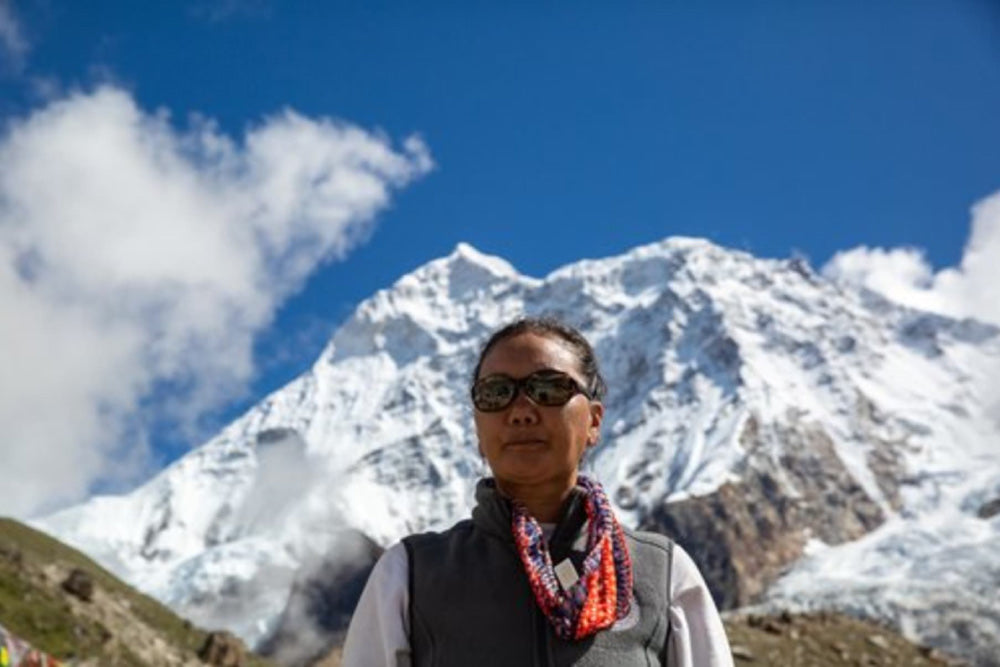
Lhakpa Sherpa is 47 years old and was born in Makalu. She is currently recognized as the first Nepali woman in history to have reached the summit of Everest. Her goal is to elevate the role of women and be an example of overcoming challenges for other women.
She has climbed Everest 9 times, making her the woman who has achieved it the most times in history. Her first ascent was in 2000, eight months after giving birth and while two months pregnant with her second child.
We hope that if you didn't know about the Sherpa people before, you now have a clearer idea of what lies behind Everest expeditions and know that there are many peoples, cultures, and trades we are completely unaware of. On the other hand, if you already knew about them, we trust this article has helped you discover something new.
For your own mountain adventures, equip your expedition with the best accessories. Explore our backpacks and luggage to carry everything you need, and protect your eyes from the elements with our ski goggles and masks. Also, don't forget to keep your head warm with one of our hats, essential for low temperatures.