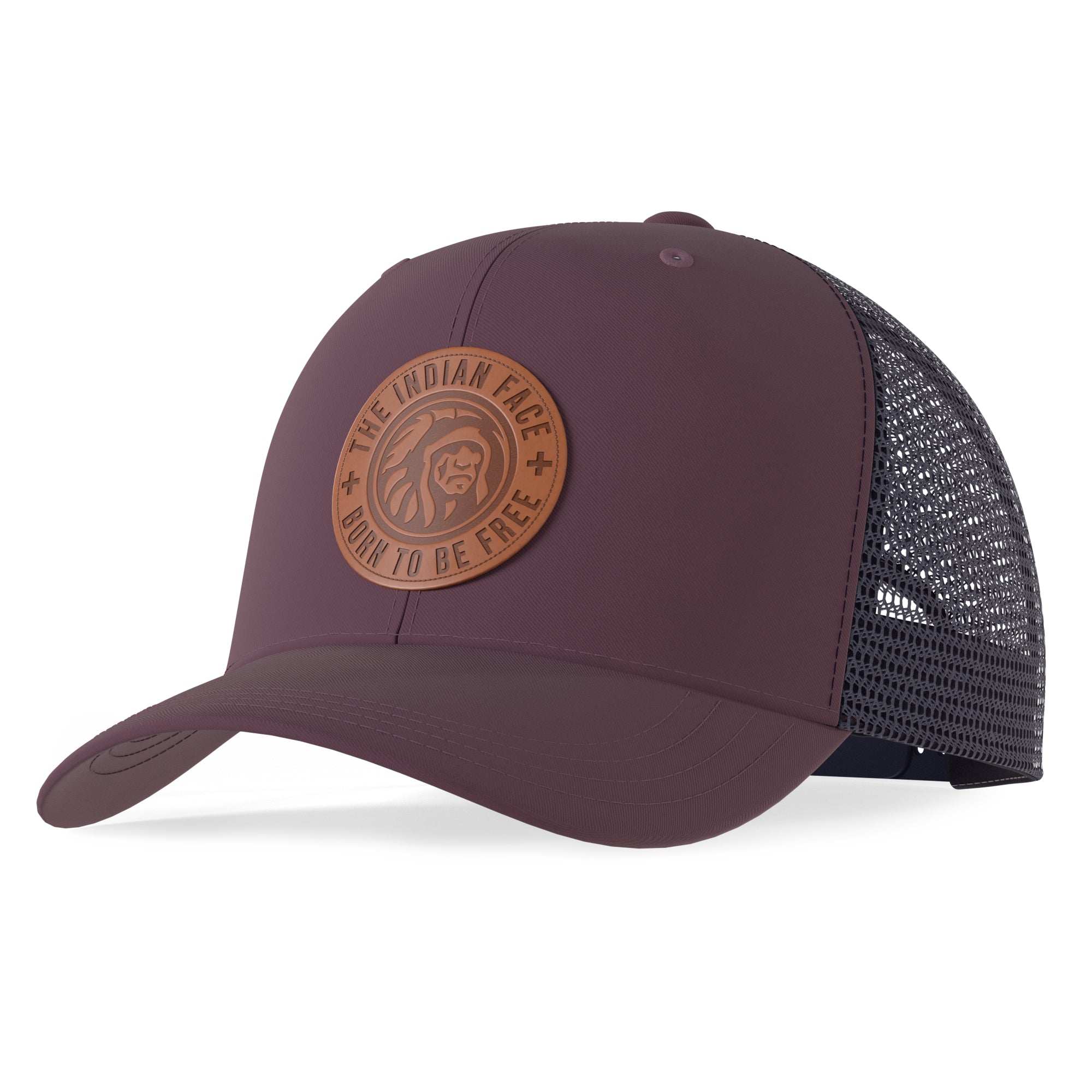
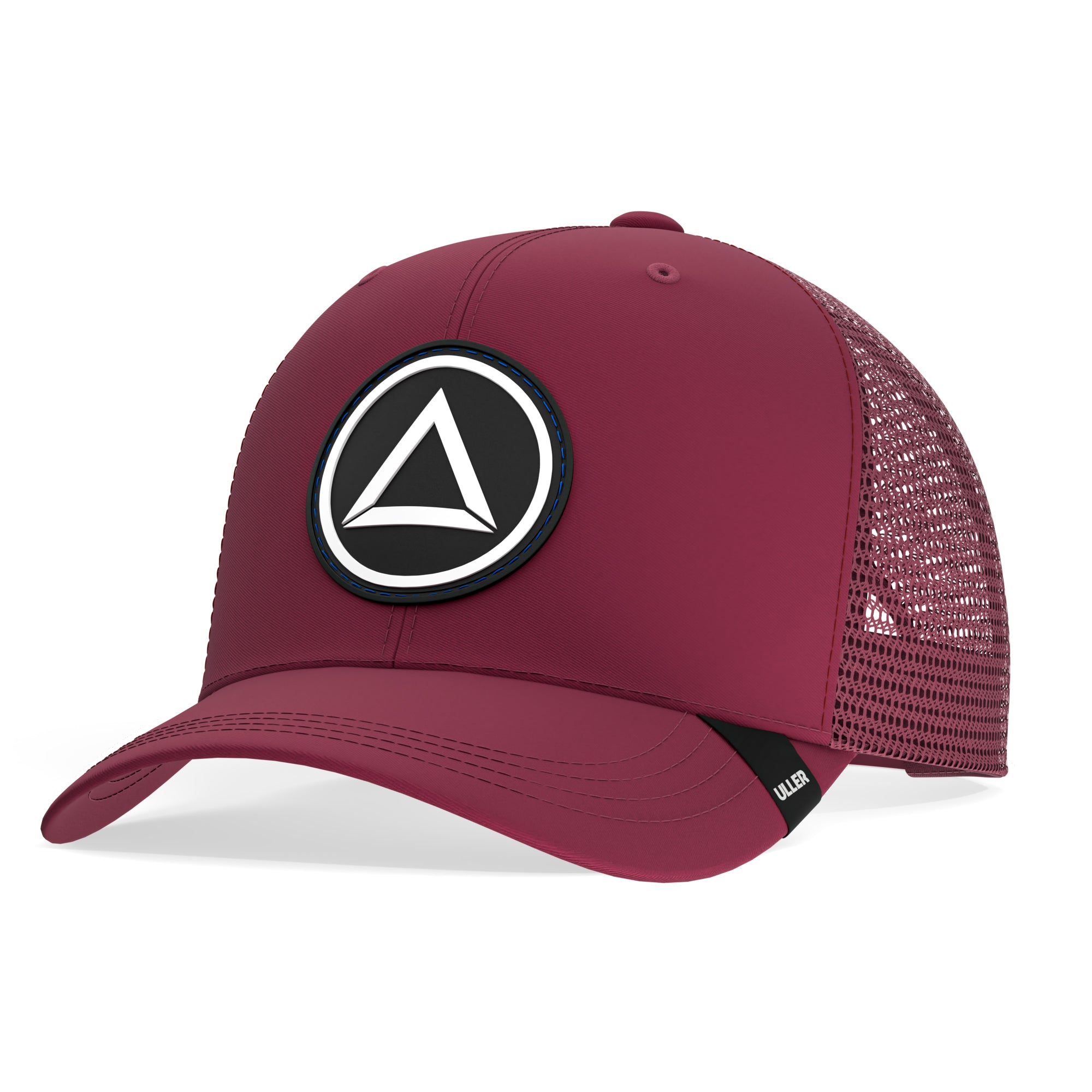
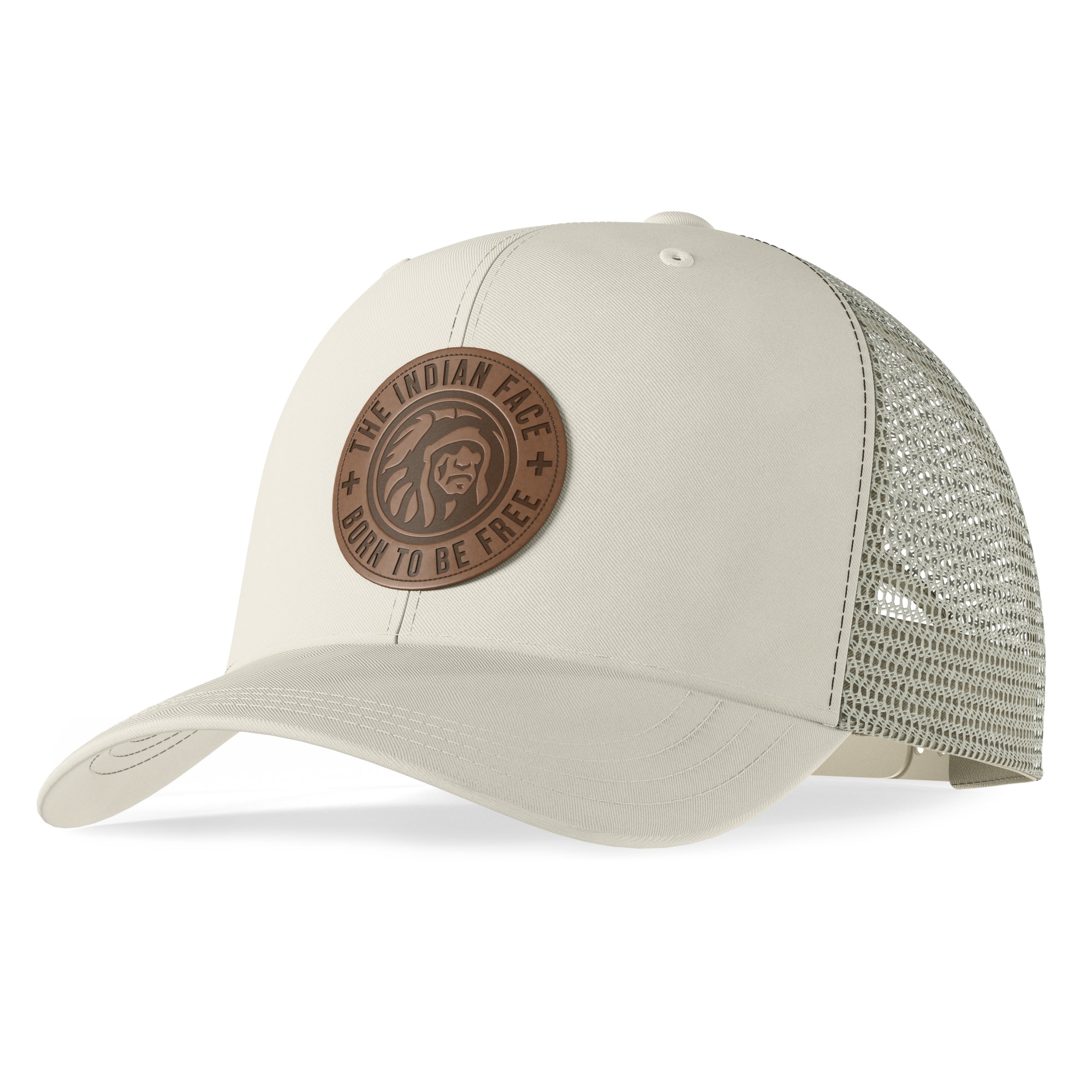
If two caps fit you equally well from the front, turn them around. The mesh, inner seams, and closure usually tell you more about how you’ll wear them than the color or patch does. For a closer look, we’re using a six-panel Born to be Free Blue.

The front and crown give the cap its shape
The crown is the entire part that covers your head. On this trucker cap, it consists of six panels sewn together. The front panels are made of cotton and hold the circular patch. If you look at the cap from above, you can follow the center seam from the top button to the brim. From the side, you can see how much volume sits above the forehead.
Some fronts stay upright when you set the cap on a table, while others fold right away. That difference changes how it looks when worn. A structured front keeps a defined line above the eyebrows. If you prefer a cap that follows your head’s shape more closely, it’s worth trying a less structured or shallower crown.

What the mesh back adds
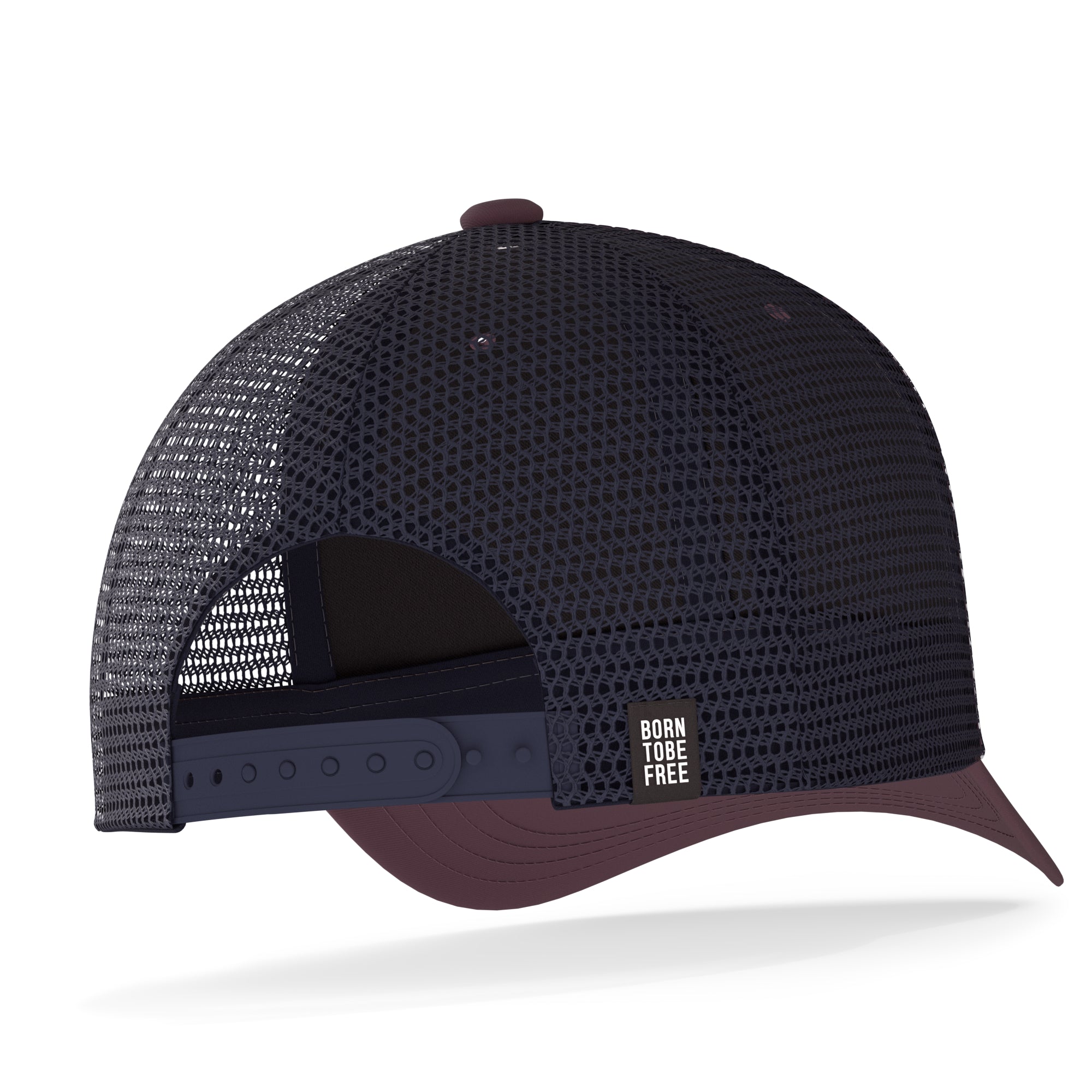
If you hold the cap up to a window, you can immediately see which parts are dense and where the light passes through. Behind the side seam, the tightly woven fabric gives way to open mesh, allowing air to circulate. On this cap, the mesh and front are navy blue. You notice the change in material more when you turn your head than when you look at it from the front.
The mesh doesn’t cover the same area on every trucker cap, either. To compare two, turn each one around and look at how much solid fabric surrounds the temples and how the mesh extends toward the nape. A front-facing photo barely shows this difference. The rear view also reveals whether the opening gives you enough room to wear your hair tied up at your usual height.

The curve of the brim is clear from the side
The brim of the Born to be Free Blue comes curved. From the front, you can see the arc. From the side, you can tell how far it extends beyond your eyebrows and how close it sits to your line of sight. If you try it on, first position it where you’d normally wear it. Then look straight ahead and down to see if it feels comfortable in both positions.
If you wear sunglasses, try the pair you usually wear. The brim may sit exactly where you want it, but the edge of the crown could still press against the arms. If that happens, try repositioning the cap and loosening it one notch. If it still feels uncomfortable over your ear, compare it with a shallower crown.

The sweatband is the part you feel when you wear it
The sweatband runs around the inside of the crown and rests against your forehead and the sides of your head. It’s one of the first areas worth checking when examining a cap. Run your finger along the part that sits above your eyebrows and check for a protruding seam or a join that lines up exactly where the cap presses against you.
From underneath, you can also see the tapes covering the panel joins. They run toward the center of the crown, leaving the mesh visible between them. If you've just worn the cap and the band is still damp, let it air out before putting it in a backpack. The care instructions for this model recommend hand washing.

How to check the snapback fit
The snapback joins two plastic straps at the back. One has holes and the other has pegs. Each setting changes the circumference. Start with a setting that lets you wear the cap securely, with the band resting gently against your forehead. Then tilt your head and turn it from side to side. If it moves too much, tighten it by one setting and try again.
If you have to use the last hole to put it on, you have little room to loosen it. If it's already on the tightest setting and shifts when you move your head, a model with a smaller adjustment range may suit you better. For online purchases, save your measurement in centimeters and check the model's range if it's listed in the product details.