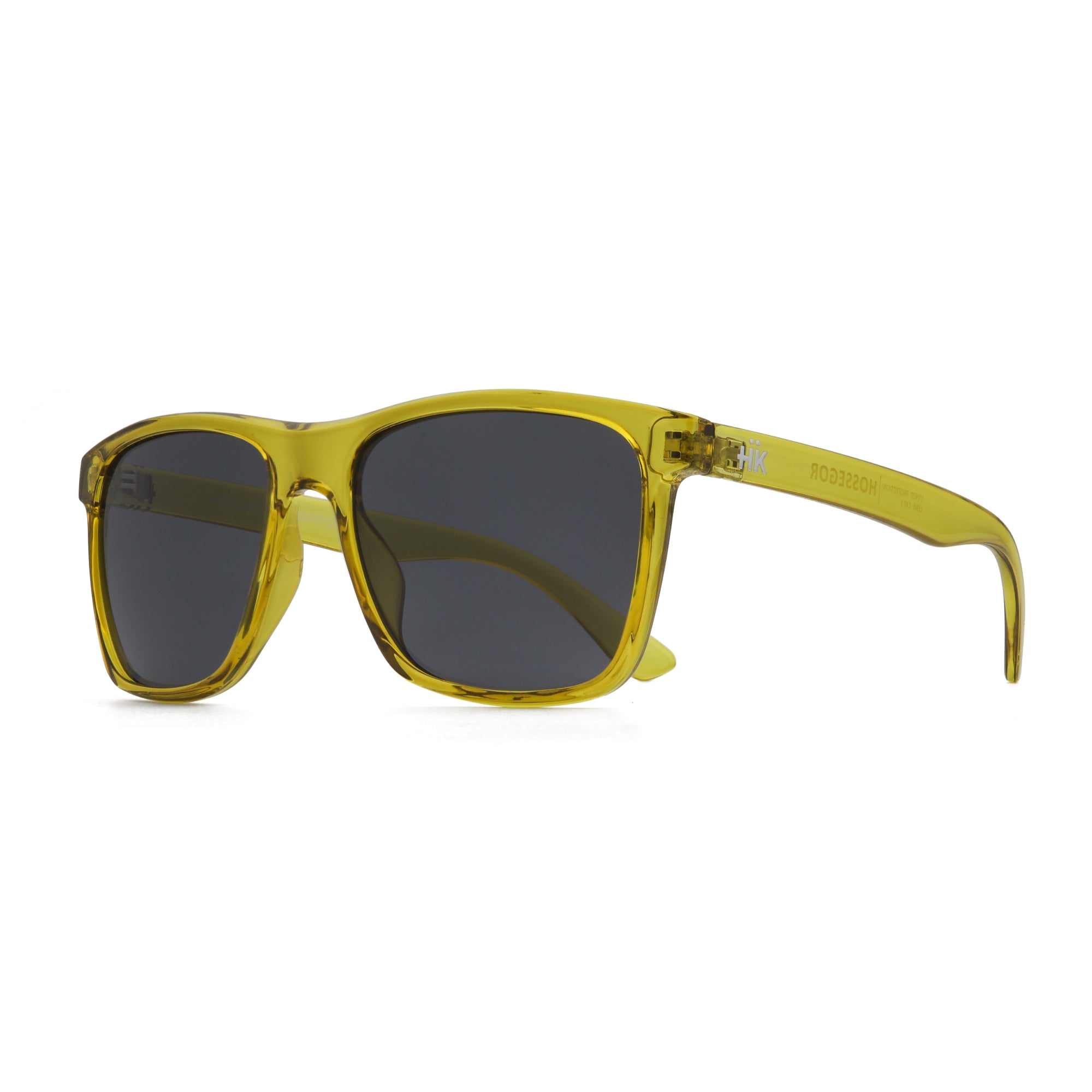
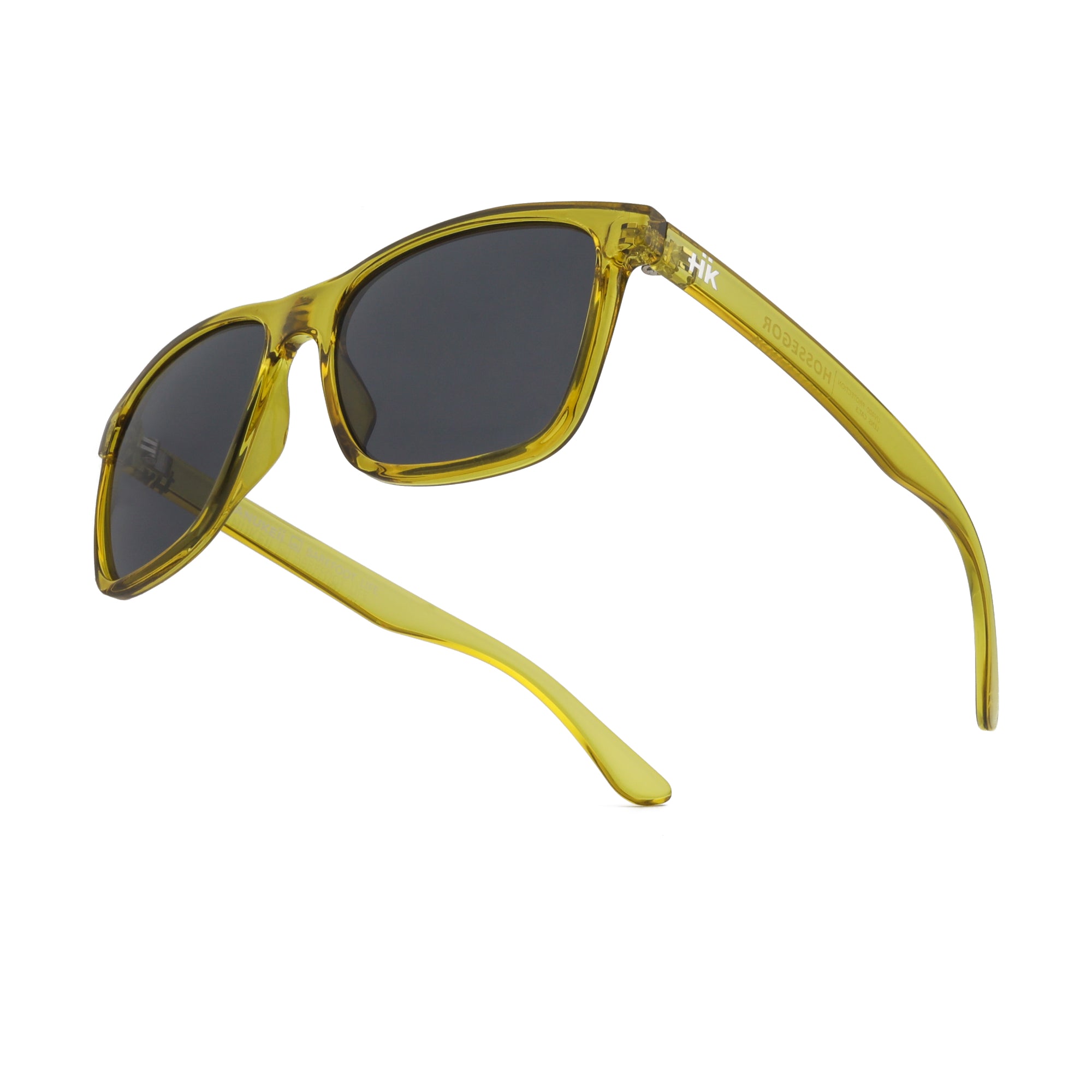
There are habits that are part of the routine without us thinking much about them. Grabbing the keys before leaving. Checking your phone. Putting on a jacket if the weather changes. And, more and more, going out with sunglasses. Not only because they complete the look, but because they protect a part of the body we often demand a lot from but care for little: the eyes.
For a long time, we’ve associated sunglasses with summer, the beach, or clear sky days. But that idea falls short. Light is present all year round. Also in winter. Also on cloudy days. Also when you’re driving. Also when you’re in the snow, in the mountains, on a terrace, on a hike, or simply walking through the city.
The question shouldn’t just be “Do these sunglasses look good on me?” The question should also be: “Do they protect me well?”, “Are they comfortable for what I’m going to do?”, “Do they reduce glare?”, “Do they help me see better in this environment?” Because good sunglasses aren’t just an aesthetic accessory. They’re a simple tool to spend more time outdoors with greater comfort.
At The Indian Face, we believe sunglasses should combine protection, design, and real use. It’s not about wearing something pretty for five minutes, but about finding a piece that accompanies you in the city, on the road, at the beach, in the mountains, in the snow, during sports, or any plan that starts without being too planned.
If you’re looking for a model to accompany you at different times of the day, you can explore our collection of The Indian Face sunglasses, designed for those who spend more time outside than inside.

Wearing sunglasses shouldn’t depend only on summer
One of the most common mistakes is thinking that sunglasses are only necessary when it’s very hot. In reality, temperature doesn’t determine the radiation or brightness your eyes receive. It can be cold and still very bright. It can be cloudy and there can still be UV exposure. It can be winter and the snow can reflect more light than a beach in August.
Sunlight affects your vision all year round. That’s why wearing sunglasses should be seen as a habit, not a seasonal choice. Just like you use sunscreen when you’re going to be exposed, or choose appropriate footwear if you’re going to walk a lot, sunglasses are part of that basic preparation for going outside.
This doesn’t mean always wearing the same glasses in every circumstance. It means learning to choose. A lens for bright sunny days doesn’t have to be the same one you’d use on a cloudy morning. Glasses for driving won’t always be the best for skiing. A frame for the city might not be the most suitable for a sports route. But the habit of protecting your eyes should be present in all those scenarios.
In your daily life
The simplest and perhaps most important situation: daily use. Going for a walk, going to work, running errands, sitting on a terrace, driving in the city, strolling through a park, or spending a few hours outdoors. These are normal moments, but they all add up to exposure.
Many people only wear glasses when the sun is obviously bothersome. However, there are days with diffuse light when you don’t notice strong glare but end up squinting for hours. That tension builds up. By the end of the day, your eyes may feel tired even if you haven’t done anything special.
Comfortable and versatile glasses can become a daily essential. They don’t have to be exaggerated or too technical. It’s enough that they protect, are lightweight, and fit your style. A black, tortoiseshell, brown, wood-effect, or simple-lined frame can work very well for everyday use.
If you don’t yet have that pair of glasses you leave near the door because you know they will accompany you on almost any plan, that is probably your first goal.
When you go to the beach or the pool
The beach and the pool are two of the environments where wearing sunglasses makes the most sense. Not only because of direct sunlight but also because of reflections. Water constantly reflects light. Sand, bright surfaces, towels, rocks, and the open environment multiply the feeling of brightness.
It is common to wear glasses when arriving at the beach and take them off when entering the water or sitting on the shore. But precisely those moments can also be demanding for your eyes. If you are chatting near the sea, walking along the shore, or resting by the pool, your eyes remain exposed.
In this context, polarized sunglasses are especially useful. They help reduce some of the water's reflections and offer more comfortable vision. It's not just about seeing darker, but about seeing with less annoying glare.
It is also worth remembering that the beach requires extra care for your glasses. Sand, salt, sunscreen, and heat can dirty or damage the lenses. After heavy use, the ideal is to rinse them with fresh water, clean them with mild soap if necessary, and dry them with microfiber.

When driving
Driving is another key moment to wear sunglasses. Often we think that inside the car we are protected, but the reality is that light can be very annoying at the wheel. The low sun, reflections from asphalt, the windshield, the hood of other vehicles, or even glass buildings can make vision difficult and increase eye fatigue.
When you drive, your eyes work constantly. You read signs, calculate distances, check mirrors, anticipate movements, and react to changes in light. If there is also glare, everything becomes more uncomfortable.
For daytime driving, glasses with good protection and suitable lenses can make a difference. Polarized lenses are very useful because they help reduce reflections on the road and windshield. However, they must be glasses that do not distort the perception of important colors, such as traffic lights or signs.
It is also advisable to choose an appropriate lens category. Category 3 lenses usually work well on sunny days, at the beach, in the mountains, and for daytime driving. On the other hand, very dark category 4 lenses should not be used for driving.
And a simple rule: sunglasses are not for driving at night. At night you need maximum visibility, a clean windshield, good lighting, and, if applicable, your regular prescription glasses.
In outdoor sports activities
When you do outdoor sports, glasses not only protect you from the sun. They also help against wind, dust, changes in light, dry eyes, and reflections from the terrain. Running, cycling, hiking, climbing, surfing, paddle surfing, skiing, snowboarding, trekking, or any outdoor activity requires comfortable and stable vision.
In sports, the choice of glasses becomes more important. Not just any frame will do. They must be lightweight, fit well, not move too much, not pinch, provide enough coverage, and allow clear vision. Glasses that slip or bother you end up distracting you.
Polarized lenses can be very useful in sports where there are reflective surfaces: water, snow, asphalt, light-colored rock, or very bright paths. They can also help reduce eye fatigue during long training sessions.
In more technical activities, it can make sense to use specifically sports sunglasses. But even in moderate sports, a good pair of sunglasses makes the difference between being protected or spending hours straining your eyes.

In mountain and hiking routes
The mountain has very changing light. You can start the route in the shade, cross an open area, walk on light-colored rock, cross a river, or reach a high area with direct exposure. The eyes continuously adapt.
In hiking, sunglasses help reduce discomfort from brightness, wind, dust, and reflections. Also, when you spend several hours walking, any small discomfort multiplies. A heavy or poorly fitting pair can be a problem. A comfortable and lightweight pair, on the other hand, almost disappears.
For mountain routes, look for stable frames, lenses with UV protection, and an appropriate category. If there is a lot of light, category 3 is usually a very versatile option. If there is snow or high mountain, you may need more specific protection.
It is also important to carry a case. In a backpack, sunglasses can easily get scratched if loose alongside keys, bottles, zippers, or hiking gear.
When you visit the snow
Snow deserves its own section. It is one of the most demanding environments for the eyes because it reflects a lot of light. Even if it is cold, sun exposure can be intense. In fact, you may feel less heat and still be subjected to very strong brightness.
In snow, eye protection is essential. The reflection can cause glare, visual fatigue, and significant discomfort. In cases of intense exposure without proper protection, solar keratitis or photokeratitis may occur, an inflammation of the cornea associated with ultraviolet radiation.
If you are going skiing or snowboarding, often the best option is to use a specific snow mask. If you are walking around a resort, driving in mountain areas, or spending time outdoors in the snow, good sunglasses can help as long as they have proper protection and good coverage.
Snow does not forgive improvisation. Just as you choose a coat, gloves, or footwear, you must choose eye protection.

Sunglasses may also be necessary on cloudy days
Another common mistake: thinking that if there are clouds, sunglasses are not needed. It's true that the sensation may be less intense, but UV radiation can still be present. Also, the diffuse light on a cloudy day can tire your eyes quite a bit, especially if you spend many hours outside.
Not all cloudy days require the same glasses. Maybe you don’t need very dark lenses, but you do need lenses that protect and help reduce visual discomfort. In this context, medium-intensity glasses or comfortable daily-use models can work.
The key is not to decide just based on temperature or if it’s “beach sunny.” Decide based on the actual light, how long you’ll be outside, and what you’ll be doing.
On trips and getaways
Sunglasses are one of the most important accessories on any trip. They take up little space, are used a lot, and can completely change the comfort of a day. From a long road to a new city, from a sunset terrace to an impromptu hike, there are always moments when you’re glad to have them.
On a trip, you also don’t always know what kind of light you’ll encounter. You might start the day in the city, end it on the coast, and the next day go up to the mountains. That’s why it’s good to carry versatile, comfortable, and durable sunglasses.
If you have more than one pair, it can also make sense to carry two: one more urban for everyday use and another more suited for driving, beach, or sports. One pair can work, but it won’t always be the best for everything.

Why you should wear sunglasses
Wearing sunglasses shouldn’t be a purely aesthetic decision. Aesthetics matter, of course. A good frame can flatter your face and complete a look. But the main reason remains protection.
- They help protect against UV radiation: as long as they have the appropriate filter.
- They reduce eye strain: especially on very bright days.
- They protect against glare: especially if the lenses are polarized.
- They improve comfort outdoors: beach, mountains, city, road, or sports.
- They help reduce dryness: by acting as a barrier against wind and air.
- They prevent constant squinting: which reduces the feeling of fatigue.
- They accompany an active life: they are part of your gear when you spend time outdoors.
How to choose your sunglasses well
Not all glasses serve the same purpose. Before choosing, think about where you will use them the most. If you drive a lot, look for visual comfort and glare reduction. If you go to the beach, prioritize polarization, protection, and durability. If you play sports, fit is essential. If you want them for everyday use, look for a versatile and lightweight frame.
Face shape also matters. Round faces usually look good with straight or rectangular frames. Square faces can be balanced with softer shapes. Oval faces can wear many options. Long faces usually appreciate glasses with some height.
But don’t turn the rules into a prison. The best glasses are the ones that suit you, protect you, and you want to wear. Because technically perfect glasses are not much use if they never leave the house.
What good sunglasses should have
- Proper UV protection: essential to protect your eyesight.
- Consistent lens category: according to the brightness level.
- Comfort: lightweight, not tight, and non-slip.
- Durable frame: especially if you use them outdoors or for sports.
- Quality lenses: for clear, distortion-free vision.
- Polarization when there is glare: very useful on water, snow, road, or sand.
- Lasting style: glasses you can wear for more than one season.
The Indian Face sunglasses are designed to combine style, protection, and real use. Their polarized lenses reduce glare on surfaces like water, snow, or asphalt, and their models are aimed at high brightness, beach, mountain, driving, and outdoor life. You can find different options in our collection of polarized sunglasses.
One pair is not always enough
One of the most important ideas is this: you might not need many glasses, but it can make sense to have more than one pair. Light, weather, and plans change. Glasses for the city are not always the best for snow. Glasses for the beach might not be the most suitable for a cloudy day. Very sporty glasses might not fit a more urban look.
Having several well-chosen models is not hoarding. It’s about adapting better. You can have versatile glasses for everyday use, polarized ones for driving and the beach, and sportier ones for hiking or training. Three sensible pairs can be used more than ten pairs bought without thinking.
The important thing is to build a small selection that fits your real life.
How to care for your glasses so they last longer
A good pair of glasses also needs care. Clean them with water and mild soap when they are dirty. Use microfiber, not t-shirts or napkins. Store them in their case. Do not place them face down. Do not leave them for hours on the car dashboard. Do not put them loose in your backpack next to keys or bottles.
Durability doesn’t depend only on how a product is made but also on how it’s used. Taking care of your glasses is a way to consume better. Fewer unnecessary replacements. More pieces that stay with you.
Frequently asked questions about when to wear sunglasses
When should I wear sunglasses?
Whenever you’re going to spend time outdoors with brightness, sun exposure, or reflections. Not only in summer: also in winter, driving, snow, mountain, beach, city, or sports.
Should you wear sunglasses on cloudy days?
Yes, it can be advisable. UV radiation can still be present, and diffuse light can also tire your eyes if you spend many hours outside.
What sunglasses are best for driving?
For daytime driving, sunglasses with UV protection, good visual clarity, and polarized lenses that reduce reflections from asphalt and windshields usually work well. Sunglasses should not be used for night driving.
Are they necessary in the snow?
Yes. Snow reflects a lot of light and can be very demanding on the eyes. In snow sports, it may be advisable to use a specific mask, but for outdoor use, suitable sunglasses also help a lot.
Are polarized sunglasses better?
They are better for situations with reflections, like water, snow, road, or sand. Polarization reduces glare but should be accompanied by proper UV protection.
Where to buy sunglasses for daily and outdoor use?
You can find models for city, beach, mountain, driving, and active life in the The Indian Face sunglasses collection.
Conclusion
Wearing sunglasses is not just a fashion matter. It’s a simple way to protect your eyes, reduce light discomfort, and better enjoy outdoor life. Summer, the beach, and sunny days are just part of the story. There’s also the road, the mountain, snow, cloudy days, travel, sports, and daily routine.
The key is to choose well. Glasses with real protection, suitable lenses, comfort, and a style you want to wear. Because the best glasses aren’t the ones that look perfect in a photo, but the ones that accompany you time and again when you go outside.
Discover our collection of The Indian Face sunglasses and find the model that best fits your upcoming days of light, road, beach, mountain, and adventure.