


How to choose sunglasses according to your face shape
Choosing sunglasses isn’t always as simple as it seems. You might fall in love with a frame in a photo, see it perfect on someone else, and when you try it on, feel that something doesn’t fit. It doesn’t mean the glasses are pretty or ugly. It means every face has its own proportions.
The shape of your face greatly influences how glasses look. Some can visually lengthen the face, others soften sharp features, some add structure, and others balance the forehead or jaw area. That’s why knowing your face type can help you choose better.
This guide is not an infallible rule. Style also depends on attitude, how you dress, and how you feel wearing glasses. But it can give you clear guidance to find a frame that flatters you and makes sense for you.
If you want to explore different shapes, colors, and styles, you can discover our collection of The Indian Face sunglasses.
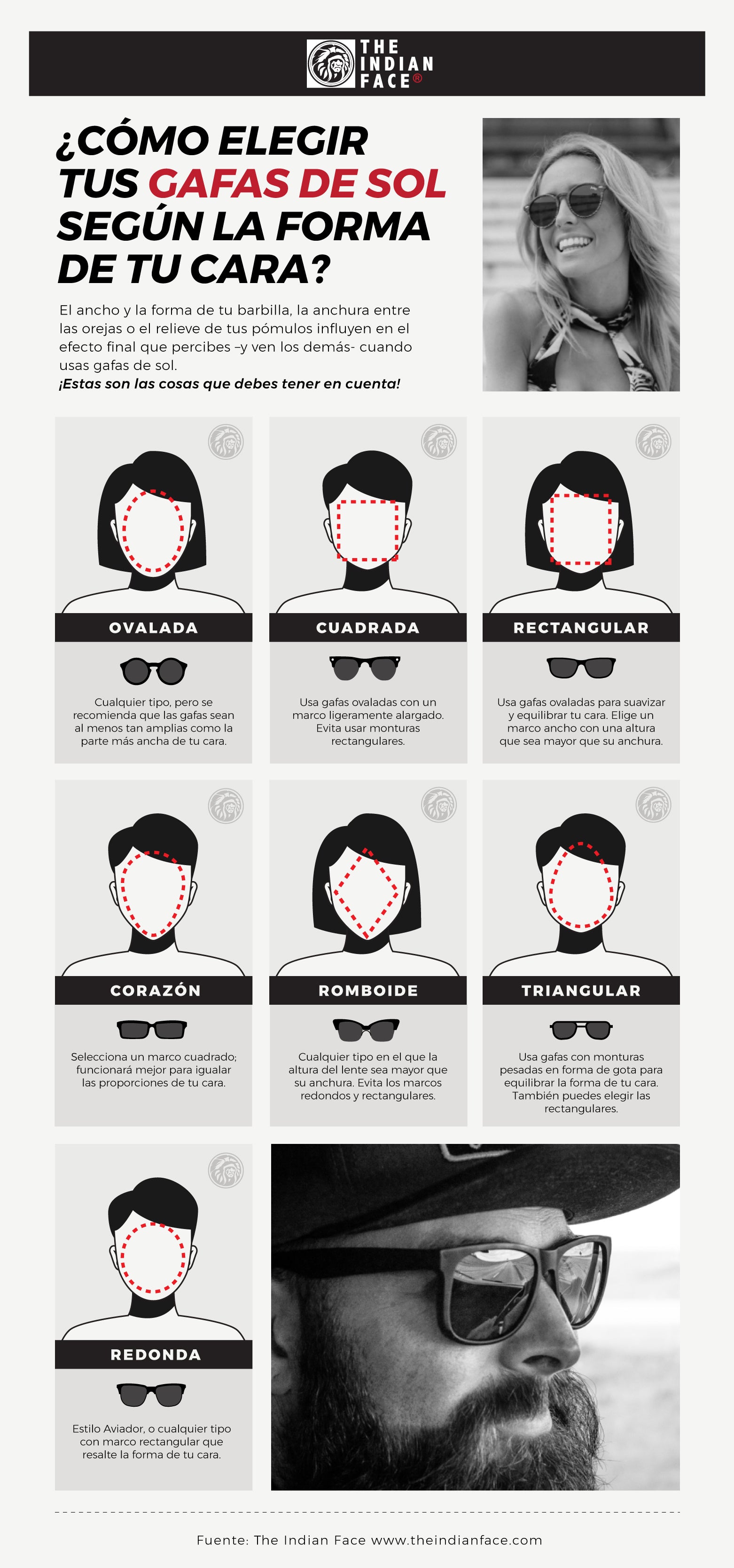
Oval face
The oval face is often considered one of the most versatile. It has balanced proportions, soft lines, and a harmonious relationship between the forehead, cheekbones, and chin. If you have this face type, you can afford to try many glasses shapes.
Rectangular, round, aviator, sporty, soft cat-eye, or even more geometric designs can work well. The key is proportion: the glasses should be at least as wide as the widest part of your face, but not excessively large.
If your oval face is very long, frames with a bit more height can suit you. If it’s smaller, look for proportionate glasses that don’t cover too much of your face.
Recommendation for oval face
Try different styles, but prioritize proportion. It’s a very flexible face shape, so you can choose more based on your personality than on the need to balance features.
Square face
A square face usually has a strong jawline, wide forehead, and straight lines. It’s a very prominent shape but can look too harsh if paired with very angular frames.
Oval, round, or aviator-style glasses usually work well to balance it. Curves help soften the jawline and give a lighter feel overall.
Avoid frames that are too rectangular or very square if they overly emphasize the natural structure of the face. The goal is not to hide your features but to balance them.
Recommendation for square face
Look for rounded, oval, or aviator shapes. If you choose a square frame, make sure it has softened edges.

Rectangular or elongated face
A rectangular or elongated face is longer than it is wide. It usually has relatively straight sides and a strong vertical impression. Glasses can help balance that length.
Frames with some height, oval shapes, medium or large-sized glasses, and designs that add presence around the eyes work well. Glasses that are too narrow or small can make the face look even longer.
Recommendation for rectangular face
Choose glasses with lens height and frames that have presence. Avoid very thin or narrow designs if they don’t balance the face’s proportions well.
Heart-shaped face
A heart-shaped face usually has a wider forehead, prominent cheekbones, and a narrower chin. The goal is to visually balance the upper and lower parts of the face.
Lightweight frames, designs with soft lines, rounded shapes, or glasses that don’t add too much visual weight to the upper area can work well. Soft square frames can also be flattering if they are well proportioned.
Avoid glasses that are too large on the upper part if they make the forehead look even wider.
Recommendation for heart-shaped face
Look for balanced, lightweight frames with soft shapes. The key is not to overload the upper part of the face.

Rhomboid face
The diamond-shaped face is characterized by prominent cheekbones, a narrower forehead, and a thinner chin. It’s a face with a lot of personality, where glasses can help balance the upper area and soften the angles.
Frames with some height, oval shapes, or designs that aren’t too narrow usually work well. Glasses with a slightly more defined upper part can also help balance the cheekbones.
Recommendation for diamond-shaped face
Look for glasses with height and balance. Avoid frames that are too small or excessively round if they overly emphasize the cheekbones.
Triangular face
The triangular face usually has a wider jaw and a narrower forehead. In this case, glasses can add presence to the upper part and balance the visual weight of the lower area.
Frames with a defined upper part, aviator shapes, rectangular designs, or glasses with some structure work well. The idea is to draw attention to the eyes.
Recommendation for triangular face
Choose glasses with presence in the upper area, aviator style, or soft rectangular shapes. Avoid models that are too small and don’t balance the jawline.
Round face
The round face has soft lines, wide cheekbones, and little angularity. To balance it, glasses with straight lines, rectangular, square, or geometric frames usually work well.
This type of design adds structure and can visually lengthen the face. Glasses that are too round can emphasize the circular shape of the face, so they are not always the most flattering option.
Recommendation for round face
Look for rectangular, square, or angular frames. If you like round shapes, try to avoid ones that are too small or too soft.

Shape matters, but comfort does too
Beyond face shape, there is something fundamental: glasses must be comfortable. They shouldn't pinch the temples, slip down the nose, touch the cheeks too much when smiling, or sit off-center.
A pair of glasses can be very flattering, but if they aren't comfortable, you'll end up leaving them at home. The best choice is one that balances style, protection, and practical use.
How to know if glasses fit you well
- The frame should be centered: neither too high nor too low.
- The width should match your face: it shouldn’t stick out too much or be too narrow.
- The lenses should cover the eyes well: without completely hiding your expression.
- The bridge should rest comfortably: without leaving excessive marks.
- The temples should not press: especially if you’re going to wear them for hours.
If you’re looking for glasses for your face, style, and plans, you can explore our collection of sunglasses and find the model that fits you best.
Frequently asked questions about glasses by face shape
What glasses suit a round face?
Rectangular, square, or geometric frames usually suit round faces because they add structure and visually lengthen the face.
What glasses suit a square face?
Round, oval, or aviator glasses help soften the angles of a square face.
What glasses suit an oval face?
An oval face suits many shapes. The important thing is to choose a frame proportional to the size of your face.
What glasses suit an elongated face?
Glasses with some height and presence help visually balance the length of an elongated face.
Where to buy sunglasses according to my face shape?
You can find different shapes and styles in the The Indian Face sunglasses collection.
Conclusion
Choosing sunglasses based on face shape isn’t about limiting yourself, but understanding which frames can help you look your best. Good glasses balance proportions, protect your eyes, and add personality.
Shape matters. Style does too. But in the end, the best glasses are the ones that suit you, feel comfortable, and fit the life you lead outside.


